Deutsch under construction |
J.
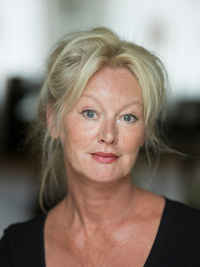
J. Hermsen (1961) is a Dutch writer and philosopher, who
studied art & philosophy in Paris and now lives and works in
Amsterdam.
She has published four novels, Het dameoffer (1998), the story of
a daughter looking for her lost parents, Tweeduister (2001), a historical
novel on the Bloomsburygroup, (Virginia Woolf and Vivienne &
T.S. Eliot), De profielschets (2004), a campus novel and satire
on academic philosophical life and De liefde dus (2008), a novel
on the 18th century writer and philosopher Belle van Zuylen (Mme
de Charrière).
She has also published several collections of essays on contemporary
philosophy (Sarah Kofman, Gilles Deleuze, Henri Bergson, Maurice
Blanchot, Hannah Arendt a.o.), modern art & literature. Among
her international publications there is a book on Hannah Arendt,
The Judge & the Spectator. Hannah Arendts Political Philosophy
(Peeters, 1999), which she edited together with Dana Vila, and Sharing
the difference. (Routledge 1992), which she edited together with
Alkeline van Lenning.
Also, her second novel Tweeduister, has been translated into German,
under the title Die Gärten of Bloomsbury (Luebbe Verlag 2004).
Author of fiction & non-fiction, Arbeiderspers
PHD in Philosophy and Literature (1993) with Rosi Braidotti in Utrecht.
Last two novels So it’s love (2008) and Blindgangers (2012) both
nominated for longlist Libris,
Opzij and Ako literature prize; together 50.000 copies sold.
Last two essays Stil de tijd (2009) and Kairos. A New Engagement
(2014)
both nominated for shortlist Socrates – Best Philosophy Book of
the Year prize.
Stil de tijd rewarded with Jan Hanlo Essay prize (2010).
Stil de tijd sold 60.000 copies and Kairos 20.000 so far.
Author speaks fluently german, french and english.
Author
is a a much invited speaker on symposia about philosophy, art &
society.
Some press quotes about her work.
Kairos: ‘Briliant essays’, Vrij Nederland 2014
Stil de tijd: ‘Beautiful and important essays’, NRC 2009
So it’s love: ‘Excellent and intelligent’, Financiele Dagblad 2008
Blindgangers: ‘Heartbreaking, sharp and moving’ , De Morgen 2012
Some documentaries, TV programmes & booktrailers about her work:
- Brands met Boeken VPRO TV on Kairos
-
Brands met Boeken VPRO TV over Stil de tijd
- Stil de
tijd part 1
-
Stil de tijd part 2
- RABO lecture
2015 on Time
-
So it’s love , part
2
- Kairos.
Radboud University 2014
- NTR TV
portrait 2013
|
|
 Joke J. Hermsen |
| |
|
|
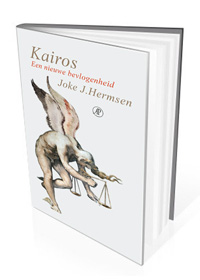
Joke J. Hermsen (February 2014) Karos.
A New Engagement
Philosophical essays about hope, inspiration & empathy.
In Time on our side, Hermsen named the
states silence, rest, slowness and ennui the necessary and appropriate
conditions for creativity, clear sight and understanding. The
book was an immediate success and has been reprinted 22nd times.
In her new book, which will probably be called in English A New
Engagement or Wishful Thinking (february 2014), she makes a passionate
plea for a new kind of engagement, which can inspire us for new
ways of ‘wishful thinking’ that will help us to find our way out
of the economical and ecological crisis. Referring to the philosophical
works of Hannah Arendt, Tomas Sedlacek and Ernst Bloch, she makes
clear that the human condition is one the one hand characterized
by 'initium', that we are and should be ‘beginners’ of new initiatives,
and by empathy on the other. After decades of nihilism and cynicism,
time has come for the homo economicus to become a homo empathicus
who embraces engagement, enthousiasm and inspiration to be his
or her leading principles. She demonstrates several ways of ‘wishful
thinking’ in philosophy, like the principle of hope (Ernst Bloch)
and the principle of natality (Hannah Arendt), and describes creative
initiatives in local economics, metamodernist art and cooperative
ecology networks.
Kairos,
Poetry & Time: Immortal Moments of Truth September 2014,
opening speech of the academic year of Radboud University Nijmegen,
Netherlands.
|
|
Kairos. A new Engagement
|
| |
|
|
J.J.
Hermsen (1961) is an author and philosopher. She debuted
in 1998 with the novel Het dameoffer (A lady’s sacrifice), which
was soon followed by the novels Tweeduister (Smokefall), an historical
novel about the two writing marriages Vivien & Tom Eliot and
Virginia & Leonard Woolf, De profielschets (En profil) and De
liefde dus (So It’s Love), also an historical novel about Mme de
Charriere, Mme de Stael, Cagliostro and Benjamin Constant, which
was extraordinary well received by the press and nominated for the
Libris Prize in 2009.
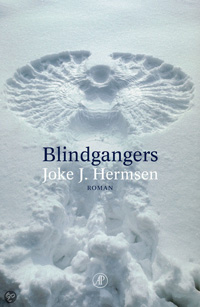
Her latest novel Blindgangers (2012), a society satire, has also
been nominated for this prestigious price.
She is also the author of the essay collection Heimwee naar de mens
(Nostalgia for mankind), which was shortlisted for the best philosophical
work in 2003.
In 2008, her entire oeuvre was awarded with the Halewijn literature
price.
In 2010 she published a philosophical essay on soulfulness, Windstilte
van de ziel, (Calmness of the soul) which sold 45.000 copies.
In 2012 her essay on time 'Stil de tijd' (Time on our side) was
awarded with the Jan Hanlo Best Essay Book of the Year and sold
more then 50.000 copies.
|
|
Blindgangers
|
Time
on our side. Manifesto for a Slow Future
Press about Time on our side:
'A well-considered and stimulating collection of essays. Hermsen gives
a crystal clear demonstration of how boredom and slowness can awaken
creativity.' De Morgen
'Well-wrought and highly readable' De Volkskrant, ***** (five stars)
Preface Time on our side
The Place that Time Forgot
When I woke up this morning - it was about eight o'clock and, save
for the birds twittering in the fruit trees, virtually silent - I
had to rack my brains to figure out whether it was Tuesday, Wednesday
or Thursday.
It mattered, because I was expecting guests from Holland on Thursday,
which involved shopping and getting
the spare room ready. I frantically tried to open an imaginary calendar
in my mind
in which I might find today's date. I had left my diary at home because
who needs it during a long summer in the French countryside? And so
I had to recover both day and date from memory, something that I think
nothing of in the city. But no matter how hard I tried to tell the
past couple of days apart and thereby introduce some structure to
time and arrive at the right date, I could not work it out and saw
only blank, undated pages before me. After barely a week in the middle
of nowhere I had lost my sense of time. The impression that I was
coasting in time, drifting toward an uncertain future without any
beacons or solid ground, confused me. But a moment later this apprehension
made way for resignation, relief even. Here, in this languid valley
wedged between two rivers, surrounded by the forests, fields and vineyards
of the Bergerac, we live by different rules and a time other than
that of the punctuality and busy schedules of the home front.
Over the past few years, this difference
in time and in the experience of time has been the subject of several
essays of mine, which I am rewriting during this summer in the French
countryside. While the temperature reaches unprecedented heights and
time appears to retreat just that little bit further every day, I
reread everything that I have written on this complex but fascinating
topic. This secluded place is perfect for the job because I have tried
to trace another, less common experience of time and to convey the
repercussions and richness of this other time. Our hectic life in
the city gets in the way of our ability to distinguish between what,
in this book, I call 'clock time', with its universal rules and rigid
divisions, and this other time, which flows beneath our clocks so
to speak, calmly and imperturbably, and which appears to touch on
a more personal, more internal time.
The time of clocks and diaries is an abstract and social time, something
we established in order to organize the world, manage international
transport, do business. As soon as you disembark from this world,
like I did a week ago by travelling here, you disembark from this
time and enter another. A time without dates and hours, only different
gradations of light: from the delicate morning light to the intense
and blinding blue light of noon and the dusky pastel shades of the
evening which are gradually engulfed by the pitch-black darkness of
night. That's all there is to it. Day in day out. The sun rises and
sets again. This is the cosmic clock that governs life around here.
The remarkable thing is that as the day wears on in this seemingly
monotonous way, this uninterrupted flow of time is gradually permeated
by a profusion of thoughts, fantasies, experiences and memories. Although
I do not know what day it is in the morning, I do feel that the day
is mine. Instead of being driven by appointments and nervous glances
at the clock,
I feel more or less in synch with an internal time. In other words,
only by disembarking from the world's timetable can I enter such a
thing as my own time.
However elusive and complex the phenomenon of "time" is, the premise
of the essays in this book is really rather simple. Practically each
one, I realized while rereading, is informed by the idea that, since
the introduction of Greenwich Mean Time at the end of the nineteenth
century, we have been living our lives by clock time, pushing the
other, more personal or inner experience of time to the background.
We no longer appreciate that clock time, which rules our lives with
a fairly heavy hand, was once merely a practical arrangement - "by
far the most artificial of all inventions", to quote the writer W.
G. Sebald.
On holiday, we have to literally extricate ourselves from the world
and its clock time in order to experience what time really is; or
rather, to experience how we ourselves are time. Besides having time
- or not having it, as we tend to think - we are time, according to
Henri Bergson. But this personal or internal time is difficult to
label or pin down because it cannot be expressed in common units such
as hours or minutes. This other time is something that is experienced
rather than measured. That is why, for this book, I have turned to
philosophers, writers, musicians and artists who have tried to convey
the experience of this other time in their work. Although little can
be said about this internal time from a strictly scientific point
of view, it is something we really ought to start focusing on again.
In the course of the twentieth century, we have gradually submitted
to the strict rule of the clock and this has had consequences for
the way we view the world and ourselves. The law that by and large
governs the regime of clock time is the law of economic returns, whereas
the dimension in which the other time carries us is that of our inner
self, indeed of our humanity, as St. Augustine and later Ernst Bloch
have argued. The point is not to exchange one time for the other,
but to recapture this other time and to restore the balance between
the two. "Only when the clock stops does time come to life" is a quote
from William Faulkner to which I wholeheartedly subscribe. Enhancing
our sensitivity to this "true time" with which we can enrich and broaden
our time-bound existence is, in short, what I had in mind when I wrote
these essays.
Cause de Clerans, July 2009
|
|
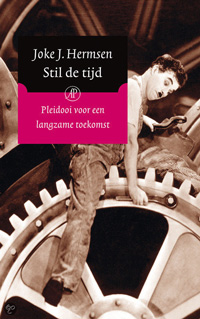 Time on our side  illustrations by Jaap de Jonge |
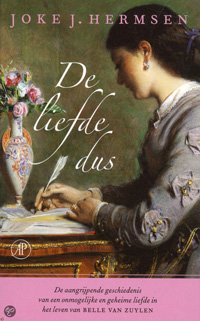
So
It’s Love
In february 2008 J. J. Hermsen published her fourth
novel: De liefde dus (So It’s Love). This novel about the 18th century
writer Belle van Zuylen, (Mme de Charrière), got immediately a lot
of attention and very good reviews from the press. It was reprinted
shortly after publication. The story focuses on the deep emotional
crisis in the life of Belle van Zuylen, caused by a secret lover,
in the pre-revolutionary summer of 1785 in Paris. The novel is a
combination of historical and fictituous letters, diaries, philosophical
dialogues, novelistic fragments, in short an exciting blend of fact
and fiction.
So It’s Love: review quotes:
“The structure – letters,
novelistic passages and diary entries – is a clever invention from
Hermsen, she uses it to make the novel intriguingly multifaceted.
It delivers up beautiful connections between past and present, nods
and mirrorings, without ever becoming repetitious. The difference
between the historical sources and the rest of the novel is scarcely
noticeable. Hermsen’s sentences are cast in stone, anchored, accurate
and on the cutting edge of the knife. “Don’t make small talk.” Hermsen
previously published an essay about this sentence of Zuylen’s, now
she makes it part of her technique. She does this from a powerful,
intelligent, daring and even biographical perspective. To sum it
up: So it’s Love is precisely as a novel should be: sans gêne and
incisive.” - Financieel Dagblad.
“Using Belle van Zuylen’s writings, Joke J. Hermsen has written
a tasteful and inventive story about the big mystery in Belle van
Zuylen’s life. In this period, Belle van Zuylen was in her mid-forties
and unhappy in her marriage. Was there something between her and
a young banker? No biographer has been able to ascertain it. So
Hermsen sets to work as a novelist on Belle and Jean-Samuel’s story,
and she has more than one reason to feel connected to her main character:
she is approximately the same age as Belle was then, just as well-read,
and just as interested in the ever fraught, exciting relationships
between men and women, body and soul, freedom and morality. Passionate
love is an illness, passion doesn’t go with morality, in love you
become a different person – just when you think you have become
yourself.” - De Volkskrant
“Joke J. Hermsen has opted for a daring narrative technique in which
a reconstructed story, letters and diary entries alternate. The
contents of Belle’s diaries come together with an account of the
journey of her lover Jean-Samuel d’Apples to America. It is a masterful
invention. For those who know the work of Belle van Zuylen, So it’s
Love can only be a welcome addition. It is surprising and exciting
and Belle’s deep inner experiences are beautifully described with
great precision. Whoever hasn’t yet heard of Belle will want to
know more about her after reading this fictive biography. The combination
of fact and fiction has worked out really well in Hermsen’s novel.”
- Literair Nederland
“Heart or head? This is the issue Love constantly comes up against.
How the dilemma is handled is dependent on time, place and culture.
Is feeling strong enough to file down the sharp edges of rational
concerns? Belle van Zuylen, the main character of writer and philosopher
Joke Hermsen’s fourth novel, So it’s Love, grapples with that question.
The way the writer creates space in which to give her own thoughts
free reign, whilst sticking to the historical facts, is admirable.
Hermsen is strongest in the more contemplative passages, for example,
when Belle writes to a friend, setting down what can go wrong in
love. Love which is too heavily based on passion carries a destructive
force within it because it leads to two people wanting to fully
fuse with each other. In so doing they extinguish the source of
love: otherness. A stimulating thought” – De Groene Amsterdammer
“Inspiring enough for a novel made up of fictive diary entries and
philosophical letters which examines the essence of love, and tries
to draw the contemporary reader into the intoxication of this ‘sickness
called love”. Hermsen’s way of building up the plot between the
boundaries of true-life fiction with a misunderstanding and a missed
meeting, as any love affair should have, is admirable. Right up
to the classic denouement how the affair panned out remains exciting.
The eighteenth century décor is splendid : the political rumours
in Paris, the furious coach journey (at the beginning) and the boat
trip (at the end) which illustract and enliven the desperation of
Belle and her lover. Equally the expansiveness of the text, the
solemn philosophical speculations of this eighteenth century worrywort
can be read as a flight into the romantic.” - Trouw
|
|
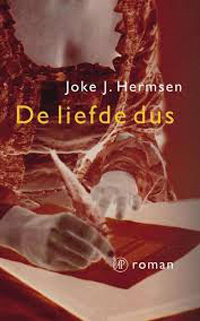
So It's Love
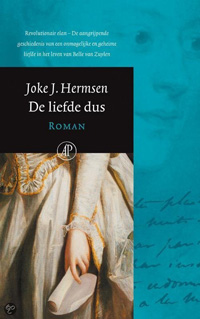
So It's Love, midprice
So It's Love, paperback
|
Biography
Belle van Zuylen - Summary of So It’s love
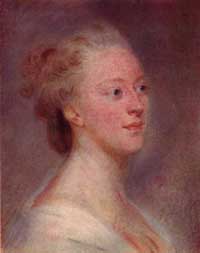
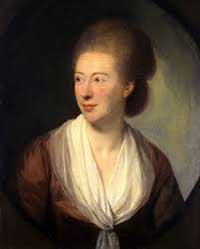
Isabella Agnetha Elisabeth Tuyll van Serooskerken (Belle van Zuylen)
was born on the twentieth of October, 1740, in Slot Zuylen. She was
the eldest daughter of an influential aristocratic family from Utrecht.
For more than 30 years, Belle van Zuylen lived in a stately castle
on the river Vecht, where she became well-versed in mathematics, physics,
philosophy, literature and music. At the age of twenty, at a ball
in The Hague, Belle van Zuylen met her first great love, Captain Constant
d’Hermenches, with whom she maintained a clandestine correspondence
for many years. Her letters to him were published two hundred years
later under the title: ‘I have no talent for subordination.’
In 1771, following years of unsuccessful courtships and suitors, Belle
van Zuylen finally married her brothers’ former Swiss tutor, Charles
de Charrière. They settled in the small village of Colombier on Lake
Neuchâtel, where she would live until her death in 1805. Belle van
Zuylen spent the first twelve years of her marriage in total isolation.
She lived with her husband and his two unmarried sisters at Le Pontet,
a country mansion in the small village of Colombier, and knew just
a few of the neighbours and local notables from in and around Neuchâtel.
She barely wrote during these years. Her time was spent peeling pears
and seeing to other daily household tasks. She was often very ill
and would visit one Swiss spa after another. According to a family
friend, Chaillet, loneliness and an unfulfilled desire to be ‘passionately
loved’ made her desperately unhappy. She didn’t begin writing again
until 1783. Around this time, she met the man with whom she would
fall passionately in love and who inspired her to write her most beautiful
novel: Caliste, or Letters from Lausanne. When this love affair came
to a premature end in the summer of 1785, partly because his family
opposed the match, Belle van Zuylen fell into the most profound depression
of her life – the focal point of the novel So It’s Love.
In the summer of 1785, Belle van Zuylen became so dreadfully ill that
she decided to leave Colombier and go travelling. She told no-one
where she was going, not even her husband. Her biographers suspect
she fled that summer because her lover had been forced to leave her
by his family. In the novel So It’s Love, Belle travels to Paris for
several weeks in order to visit the miracle healer and alchemist Count
Cagliostro, who is both condemned as well as admired for his miraculous
cures. Two years earlier in Strasbourg, he had helped cure her terrible
headaches. Now at her wits’ end, she decides to seek his advice again.
Belle van Zuylen and the count would hold long discussions, which
she recorded in her diary. However, when Calgliostro was arrested
because of his connections with Cardinal de Rohan, Belle was forced
to flee again. The Cardinal had been tricked by the fake Comtesse
Jeanne de la Motte into lending her one and a half million pounds,
the value of the diamond necklace that Marie-Antoinette had supposedly
ordered. The queen, however, knew nothing of the matter and Louis
XVI ordered anyone connected with the Cardinal, including Cagliostro,
to be incarcerated at the Bastille. The affair of the diamond necklace
is regarded by historians as the prelude to the French Revolution.
Belle van Zuylen send her diaries to a friend, since she could not
take anything that might incriminate her as one of his acquaintances.
She asked her friend to keep these letters, which contained extremely
compromising matters, safe and sealed until she would be able to collect
them again. However, the packet was intercepted by her lover and Belle
was never to see her diaries again.
|
|
Belle van Zuylen, pastel drawing
|
Fragment from So it’s love. (Farewell
letter to her lover)
To Charles Jean-Samuel d’Apples.
‘I am groping around in the dark for answers, but this much I do
know: that you returned to Lausanne after your journey to America
came to a disastrous end. During your return journey, you misplaced
many of your belongings, including my letters no doubt. You see,
I am making it easy for you. There is no need for you to confess.
You have now read all that has been tormenting me these recent months.
You have learnt my hidden fantasies and seen deep into the darkest
recesses of my heart. In short, you have dwelt in a place where
no man has ever been before or should ever be allowed to enter.
I cannot forgive you for this. I therefore make one last and urgent
plea. Burn everything of mine you still possess and avoid any situation
where there may be a danger of us meeting. Do not come anywhere
near Colombier. Perhaps one day, when the time has come to lick
the wounds that now keep us apart, we can begin writing to each
other again.
I am taking my leave, but not without first thanking you for the
music you brought to my life. Perhaps one day I will rediscover
the melody that truly echoes all that I have ever felt for you.
Adieu Jean-Samuel. I am going for my evening stroll behind the house
that you know so well, and where in summers past we spent countless
wonderful hours together. The sun has almost set and casts one last,
crimson red beam onto a single house, a single mountain peak, and
lifts it above the encircling darkness for one last moment. Everything
has sunk into deep stillness and oblivion, except for the very last
glowing ember that keeps burning for the sake of life, for the sake
of memory. Adieu.’
I. T. de C.
Except for one last sojourn in Paris, Belle van Zuylen lived with
de Charriere and his two sisters in Columbier until she died. She
composed arias, minuets and entire operas, which for the most part
have since disappeared. She also wrote several novels, including
Three Women, various essays on the works of Jean-Jacques Rousseau
and other luminaries, and, following the outbreak of the French
Revolution, published many political pamphlets under a pseudonym.
The young writer and politician, Benjamin Constant, would pay her
the occasional visit. He was a cousin of her first and greatest
love, Constant d’Hermenches, and his visits to Colombier were the
only rays of light in her life. But this too came to an end when
Constant chose the company of the much younger and much more influential
writer, Germaine de Stael. Even so, Belle’s final letter, dated
10th December 1805, was addressed to him: ‘I still say that I am
dying. My friends refuse to believe me, since I do not appear to
be suffering from anything terminal. Alas, for me, the extinguishing
of life is tantamount to death.’
Belle died during the night of 27th December, aged 65. De Charriere
was so distraught that he was unable to attend the funeral. Her
grave no longer exists. Not even a memorial stone marks the resting
place of the greatest female Dutch writer of the 18th Century. The
old cemetery was buried under a layer of clay and gravel at the
beginning of the last century. For more than eighty years now, Belle
van Zuylen has been lying beneath a tennis court.
|
|
Belle van Zuylen, painting |
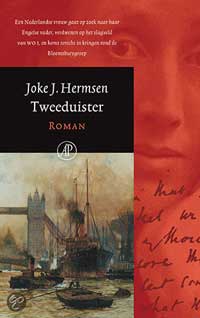
The
novel Tweeduister/Smokefall (2001)
SMOKEFALL
'Time past and time future
Allow but a little consciousness.
To be consious is not to be in time
But only in time can the moment in the rose-garden,
The moment in the arbour where the rain beat,
The moment in the draughty church at smokefall
Be remembered; involved with past and future.
Only through time time is conquered.'
T.S. Eliot, Four Quartets
In Smokefall, Hermsens second novel, the author pictures the passions,
ambitions and disillusions of a group of English and American artists
- T.S. Eliot, Virginia Woolf, Marlow Moss and Djuna Barnes - during
the turbulent years of the Interbellum, the period between the two
World Wars. In the ten years the book describes, the optimism and
avantgardism of the 'roaring twenties' passes gradually into the
fear, depression and conservatism of the thirties. The renewed threat
of war disrupts not only political life, but affects also the private
life of the modernist artists who are confronted with the complex
relation between politics and art and can no longer remain on the
sideline of public affairs.
Smokefall, situated in London and partly in Paris, follows closely
the doubts, beliefs and hopes of some of these writers who have
experimented fully with artistic and social forms but find themselves
with no defence against the threat of war and fascism. They desperatly
try to reamin faithfull to their work, but, as Virginia Woolf remarks,
'the time of the ivory tower is definitly over, we have to choose
sides.' Their political awareness increases the tension between
life and art, artistic autonomy and social engagement. 'I can't
preach in an novel,' sighs Woolf, 'but I can neither pretend that
all of this is not happening.'
The story of Smokefall is partly told by the leading character of
the book, Martha Thompson, a young Dutch woman - daughter of a half
Russian mother and an English father - partly by the historical
characters - Woolf, Eliot, Moss, Barnes - themselves. This plurality
of perspectives intensifies the experience of closeness to the different
characters of the book and increases the multiplicity of voices
and stories that are all based upon the same historical facts.
Smokefall is a fascinating novel about passion, war, artistmarriages
and the abyss between life and art. It is not only a demysticifatation
of the somewhat idealized life of the English Bloomsburygroup, it
is also a thrilling story about the impact of war on different aspects
of social life. It questions the political position of the writer
and reactualizes the issue of social engagement of art. But is is
also a novel about the search of identity, the conflicts of marriage,
the creation process, solidarity and the refuge of religion. Allthough
the novel is written in a very lucid and accesible way, which makes
it suitable for a large audience, it also contains many small details
that will surpise even the readers who know the works of Eliot and
Woolf very well.
International Press on Tweeduister/ Smokefall
/Die Gärten von Bloomsbury
'This novel is lively, sad, but yet full of hope
and love. It’s a plurform, intelligent novel, and wonderfully well
written. It’s a time-travel into the roaring twenties and a `hymne’
of a novel. You will never forget this book!’ (Germany, Alex Dengler,
in: Bild am Sontag)
'Der Roman ist lebhaft, traurig, voll Hoffnung
und Liebe. Er ist vielseitig, intelligent, aus dem Leben, und wunderbar
erzählt. Er ist eine Zeitreise in die wilden Zwanziger Jahre und
eine `Hymne von Roman! Sie werden ihn nie mehr vergessen!’
(Germany, Alex Dengler, in: Bild am Sontag)
'Hermsen paints the life in London so easily and
full of life, as if she has lived herself in that time and place.
The novel invites us to do further research, offers an exciting
story and is extremely well constructed. Behind the innocent title,
Die Gärten von Bloomsbury is hidden a literary pearl.’ (Switserland,
Renate Dubach, in Die Berner Zeitung)
'Hermsen bildet das Leben in der britischen Hauptstadt
so anstrengungslos lebendig ab, als ob sie schon damals gelebt hätte.
Das Buch regt zu Nachforschungen an, bietet spannende Unterhaltung
– und wenn nicht alles den Tatsachen entspricht – ist es hervorragend
erfunden. Hinter dem harmlosen titel Die Gärten von Bloomsbury verbirgt
sich eine belletristische Perle!’ (Switserland, Renate Dubach, in
Die Berner Zeitung)
'Hermsen plays a subtil game on the borderline
between fact & fiction. Art is confronted with political engagement,
love with religion and violence with pacifisme. The second novel
of Joke J. Hermsen is a real tour de force and also a work of great
eloquence and precision.’
(Belgium, Jos Borre, De Morgen).
'Hermsen joue un jeu subtil sur la frontière entre
fait et fiction. L'art y est confronté à l'engagment politique,
l'amour à la religion et la violence au pacifisme. Le deuxième roman
de Joke J. Hermsen est un vrai tour de force ainsi qu'une oeuvre
de grande éloquence et de grande précision. (Belgium, Jos Borré,
De Morgen)
'With this controversial and daring novel, the
author realized a remarkable, courageous and grandiose performance.
Hermsen disposes of sufficient literary qualities to write her story
in a captive, eloquent and convincing way. Her epic descriptions
and lyrical reflexions are very competent and effectif. I must congratulate
the author with her succesfull attempt to create an interaction
between fiction and history. The historical novel discovers new
ways. Highly recommanded!’(Belgium, Louis Mercx).
'Avec ce livre osé et controversable, l'auteur
a réalisé une performance curieuse, courageuse et grandiose. Hermsen
dispose de suffisament de qualités littéraires pour écrire son histoire
d'une manière captivante, éloquente et crédible. Ses descriptions
épiques ainsi que ses réflexions lyriques sont très compétents et
effectifs. Je dois féliciter l'écrivain avec son audace très réussie
d'enscener une interaction entre des personages fictives et des
personages historiques. Le roman historique découvre de nouveaux
chemins! Recommandé vivement!' (Belgium, Louis Mercx)
'Tweeduister is a highly ambitious novel. As a
fascinating tableau of the period between the two World Wars, and
as a picture of tragical artists marriages, the novel is exceptionnaly
well succeeded. Hermsen did not succomb under the heavy weight of
the huge reputations of T.S. Eliot and Virginia Woolf. On the contraray.
The dialogues are lively and fresh, the scenes follow each other
up as quickly as in a good movie. Ther is a richness of ideas and
themes, but one thought comes to the surface which recovers all
others: the fatal stream of time, the impossibilty to change its
cours, and the desperate attempts to resist to this in art and literature.
The result is, in one word, a miracle.’ (The Netherlands, Thomas
van den Bergh in Elsevier)
'Tweeduister est un roman très ambitieux. Comme
tableau fascinant de l'époque de l'entre-deux-guèrres et des scènes
de marriages tragiques, le roman est exceptionellement bien réussi.
Hermsen n'a pas cedé sous le poids des grandes reputations de T.S.
Eliot et Virginia Woolf. Au contraire. Les dialogues sont fraiches
et vivaces, les scènes se poursuivent rapidement, comme dans un
bon film. D'une abondance d'idées et de thèmes, une pensée vient
à la surface qui recouvre tous les autres: l'écoulement fatal du
temps, l'impossibilité de changer son cours, et les tentatives d'y
résister quand-même dans l'art et la littérature. Le résultat est,
en un seul mot, une merveille.' (The Netherlands, Thomas van den
Bergh, in Elsevier)
|
|
Tweeduister/ smokefall
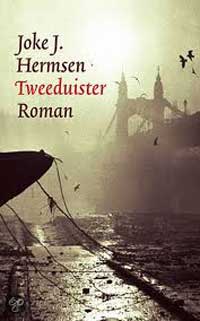
Tweeduister/ smokefall
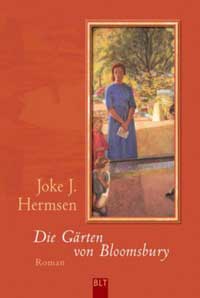
Tweeduister / Die Gärten von Bloomsbury
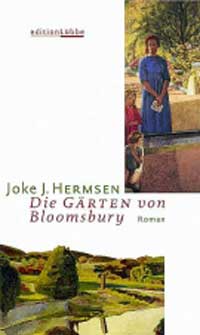
Tweeduister / Die Gärten von Bloomsbury
|
|